
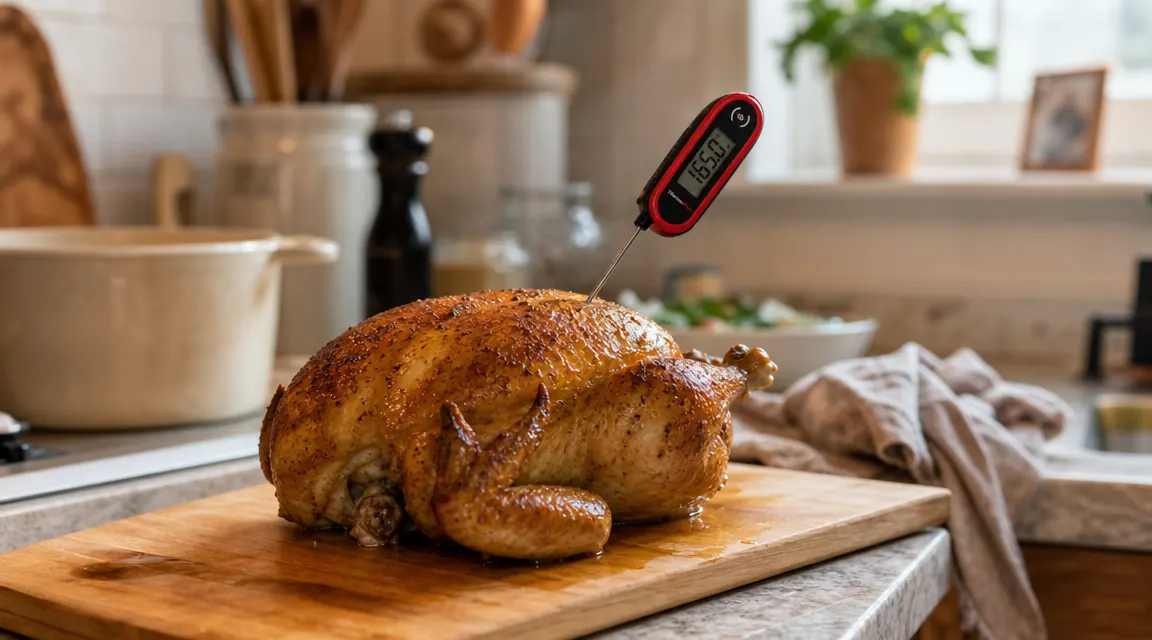
My son Caleb is nine years old and has eaten chicken I pulled off the grill approximately four hundred times without incident. I say "approximately" because I was guessing on every single one. I would cut into the thickest part, squint at the color, and convince myself that pinkish-beige was fine. It worked out, until the July cookout when it definitely did not. Nothing catastrophic, but let's call it a night that reminded me I needed a thermometer. The KIZEN Instant Read Meat Thermometer showed up at my door two days later for just under sixteen dollars, and I have used it at every single meal involving meat since then. That was eight months ago.
I want to be upfront about who I am: I am an accounting assistant with two kids, a messy kitchen drawer, and zero patience for gadgets that require a manual. I am not a chef. I grill in the backyard, I do stovetop chicken on Tuesday nights, and once or twice a year I drag a cast iron skillet to the campsite. That is the context for everything I am about to tell you about this thermometer.
The Quick Verdict
The KIZEN is shockingly good for the price. Fast, accurate, genuinely waterproof, and small enough to live in a drawer instead of a junk pile. It is not Thermapen-precise, but for everyday family cooking it does exactly what it promises.
Amazon Check Today's Price →Still guessing whether your chicken is done? This $16 fix takes two seconds.
The KIZEN has 77,000+ reviews for a reason. Sub-$20, IP67 waterproof, reads in 2-3 seconds. Check today's price before it moves.
Amazon Check Today's Price on Amazon →How I Have Used It Over Eight Months
Eight months of use means roughly 200 insertions across chicken breasts, bone-in pork chops, ground beef patties, a whole roasted chicken at Thanksgiving, three camping trips with sausages over an open fire, and one truly anxiety-inducing pork tenderloin for my in-laws. I keep the KIZEN in my utensil drawer next to the spatulas. The probe folds shut when not in use, which means it does not stab me every time I reach in for a spoon.
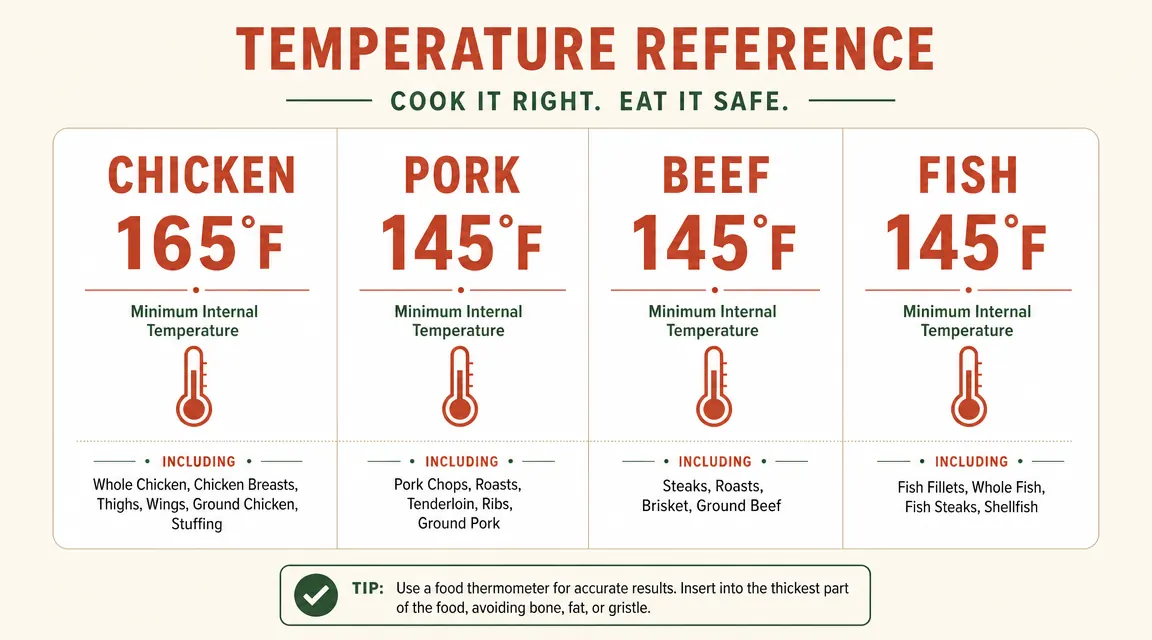
My routine is the same every time. Pull the thermometer out, flip the probe open with one hand, push it into the thickest part of whatever I am cooking, and wait. The display reads out in about two to three seconds. I check against the USDA target (165F for poultry, 145F for pork and beef), either pull the meat or give it another two minutes, and check again. It has become as automatic as checking the oven clock.
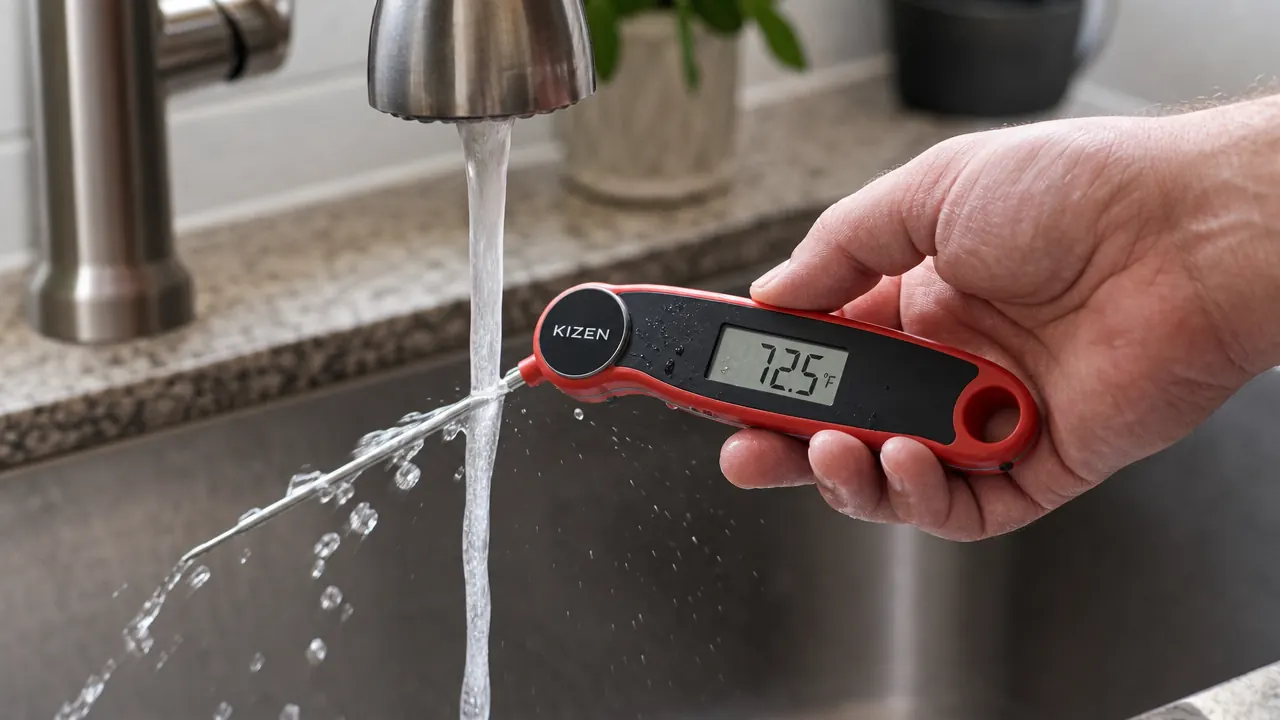
I rinsed it under the faucet after the first use because I had probe juice on it and I did not read the manual first. Turns out IP67 waterproofing means it handled that without complaint. I have done the same thing dozens of times since, and it still reads fine.
Accuracy: What I Actually Found
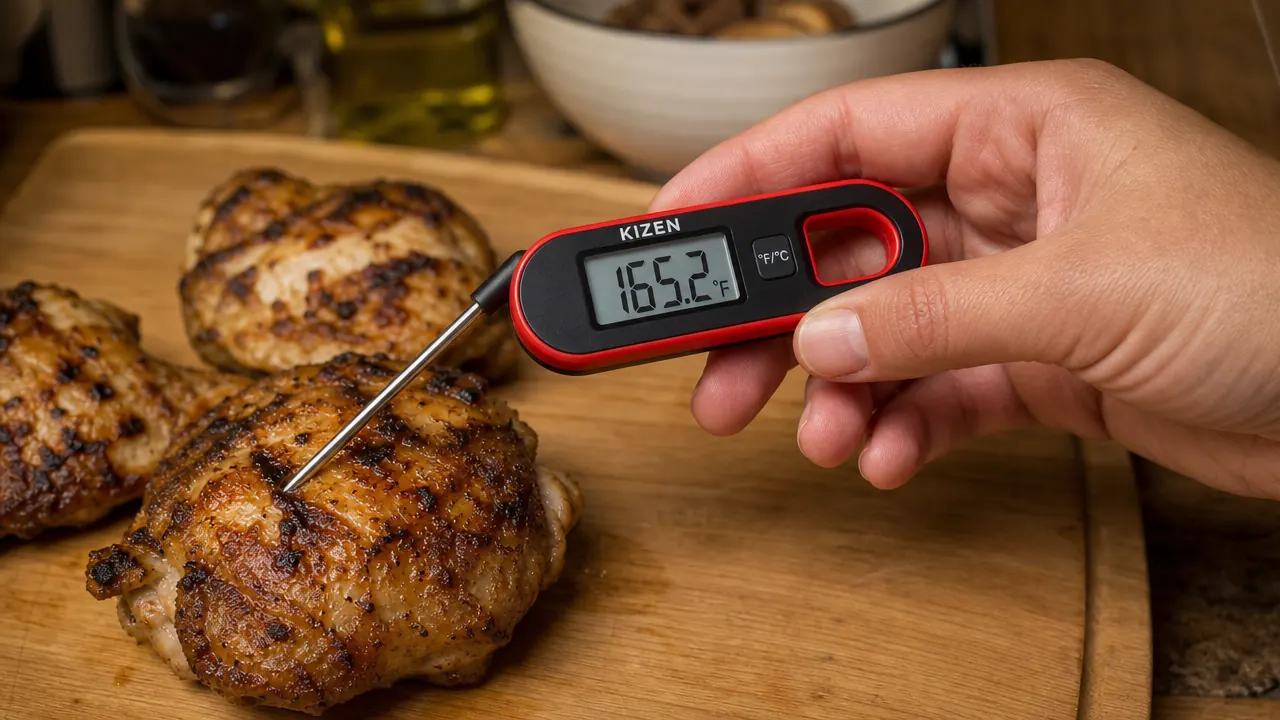
Here is the honest version: I do not own a lab-grade calibration device. What I can tell you is that the KIZEN reads consistently. When it says 165F and I cut into the chicken, the meat looks correct and nobody gets sick. When it says 152F on a pork chop, and I put it back on the heat, the texture at 145F is noticeably different from a chop I used to pull by feel. Consistency is what matters at the kitchen level, and this thermometer delivers that.
I did one informal comparison at a camping trip last fall, using a friend's Thermapen that she paid over $90 for. On three different sausages, the KIZEN read within one or two degrees of hers. On two of those reads it was exactly the same. She was annoyed by this in the best possible way.
Where I noticed the KIZEN trail slightly is on very thin cuts. A chicken tender or a fish fillet is thin enough that the probe hits the pan surface if you are not careful about angle, and that can pull the reading up. For anything with real thickness, chicken breasts, pork loins, burgers, whole birds, it is excellent. Thin cuts require a little more care with placement, which is true of any thermometer.
My friend with the $90 Thermapen checked the same sausages. The KIZEN was within one to two degrees on every single read. She was annoyed. I was delighted.
Build Quality After Eight Months
The KIZEN is made of plastic with a stainless steel probe. It does not feel like a premium instrument when you pick it up. That said, it has not broken, cracked, or given me any sign of failing after eight months. The folding probe hinge is still snappy. The display is bright enough to read in afternoon sunlight at the grill. The button that switches between Fahrenheit and Celsius works fine. Nothing has peeled or corroded.
The battery is a CR2032, which you can get anywhere. It came with one installed. I have not replaced it yet. Eight months of use and still going. The auto-off feature kicks in after ten minutes of no activity, which I appreciate because I have definitely walked away from the grill to chase a kid and come back to a dead thermometer exactly zero times with this one.
The case is IP67 rated, which means it is fully waterproof to one meter for 30 minutes. Practically, this means it survives being rinsed, being set down in a wet sink, and being dropped in a cooler of ice at the campsite (yes, that happened). I did not plan the cooler incident. The thermometer did not care.
How It Performs at the Campsite
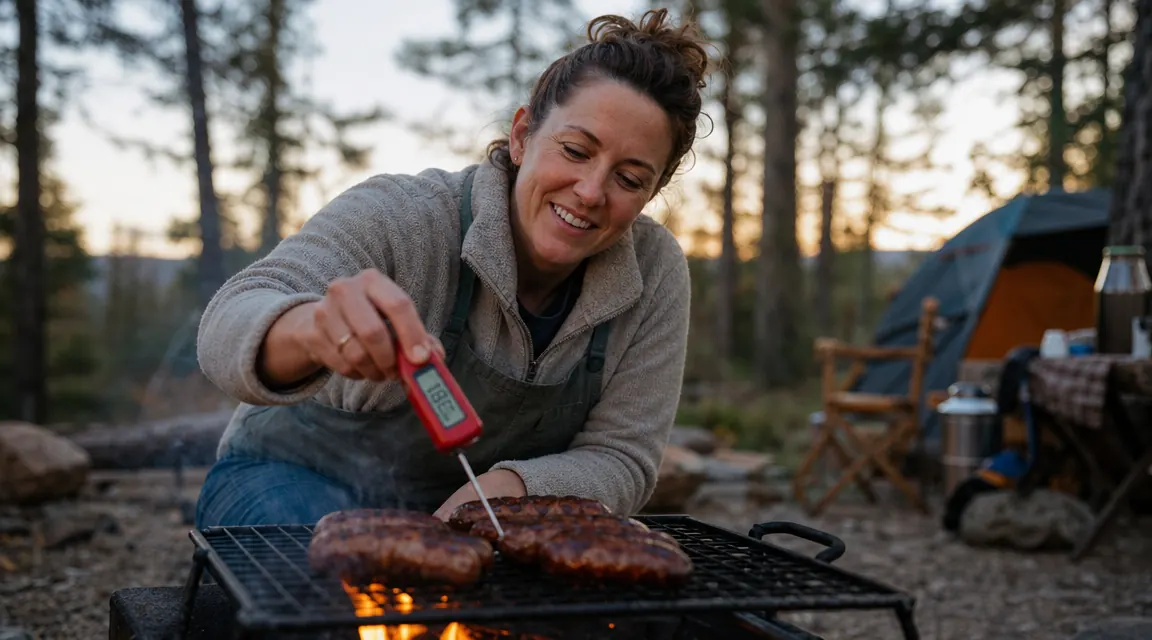
The outdoor angle matters to me because we do three or four car camping trips a year, and chicken over a propane camp stove is genuinely harder to judge than chicken at home. There is no reliable visual reference when the light is bad and the heat is uneven. The KIZEN packs flat in a camp kitchen bag, the folding probe does not snag on anything, and the backlit display is readable at dusk.
I used it on sausages, bone-in chicken thighs, and pork chops across three trips. Every single time, it performed exactly as it does at home. No sluggishness in cold temperatures above freezing, no fogging on the display. At one trip in October it was about 45 degrees at dinnertime and the thermometer still read correctly. I do not have data on sub-freezing performance because I do not cold-weather camp, but for three-season use it has been reliable.
What the KIZEN Does Not Do Well
A few things are genuinely worth knowing before you buy. The probe-to-tip distance means the tip itself reads the temperature, but the probe is about four inches long, so on a thin piece of fish you are threading a needle to get an accurate read without touching the pan. Fixable with practice but worth knowing.
The display does not hold the reading very long after you pull the probe out. If you are trying to show your spouse across the kitchen what temperature you got, you need to do it quickly. The Thermapen and some other thermometers hold the display until you clear it. The KIZEN does not. For normal use this is not a problem. For teaching someone else in the kitchen it can be slightly annoying.
It also does not come with a probe cover, which some fancier thermometers include for storage hygiene. I wipe the probe clean and fold it shut. This has been fine, but a cover would be a nice addition for the price.
What I Liked
- 2-3 second reads, fast enough for real cooking flow
- IP67 waterproof, rinse it under the faucet without worry
- Backlit display reads in dim outdoor light or a dark grill area
- Folding probe is genuinely pocketable and drawer-safe
- Auto-off preserves battery life
- 77,000+ reviews back up real-world performance
- Accurate to within 1-2 degrees of a $90+ Thermapen in informal testing
Where It Falls Short
- Display clears quickly after the probe is pulled out
- No probe cover included for storage
- Thin cuts require careful angling to avoid touching the pan surface
- Plastic body feels budget-tier, even if it performs well
How It Compares to What I Used Before
Before the KIZEN I used nothing, which is embarrassing to admit but also exactly how most home cooks operate. I made decisions based on color, firmness, and wishful thinking. My fallback was cutting the meat open and squinting, which dries out chicken and looks terrible when company is over. The KIZEN replaced all of that with a two-second answer.
I also tried a dial-type meat thermometer I had from a gift set years ago. It took 30-45 seconds to stabilize and the dial face was hard to read while standing over a hot grill. I used it twice and put it back in the drawer permanently. The KIZEN is in a completely different category in terms of usability, even though it costs about the same as that old dial thermometer did.
Who This Is For
The KIZEN is for anyone cooking meat at home who does not already own a good instant-read thermometer. That is most of us. If you are feeding kids, you already know the anxiety of chicken that might or might not be done. This thermometer turns that anxiety into a two-second data point. It is also for anyone who grills, camps, or uses a smoker and needs reliable temperature reads away from the stove. At under $20, the only argument against it is forgetting to buy it.
Who Should Skip It
If you are a serious home cook who does sous vide, competition barbecue, or precision candy and chocolate work, the KIZEN is probably not your tool. You want a Thermapen or a Thermapen One in that case, budget for it, and do not look back. If you cook thin proteins exclusively, a thermometer with a shorter probe tip or a thinner probe diameter will serve you better. And if you bake bread professionally and need to probe a thin crust, this is not the right call.
For everyone else, meaning the vast majority of people buying chicken thighs at the grocery store and worrying about whether dinner is safe, this is the right thermometer at the right price. I have recommended it to four people since I bought mine. All four have thanked me.
If you are still cutting chicken open to check the color, this $16 tool ends that tonight.
The KIZEN has earned its space in my kitchen drawer for eight months straight. IP67 waterproof, reads in 2-3 seconds, and costs less than dinner out. Check today's price and see if it has dropped since I last looked.
Amazon Check Today's Price on Amazon →