

It was a Tuesday in March. I had roasted a tray of chicken thighs while half-supervising homework, half-answering emails on my phone. When I cut into one at the table, the inside was still faintly pink near the bone. My son had already eaten half of his piece. I told myself it was probably the lighting. I convinced myself the juices looked clear enough. We all finished dinner, nobody said anything, and I spent the next two hours quietly checking everyone for stomach cramps that never came.
That night I made a promise to myself. No more guessing. I had been cooking chicken by feel and color and some vague internal clock for probably twelve years. I knew you were supposed to hit 165 degrees. I did not own anything that could actually tell me if I had. The thermometer I had received as a wedding gift broke in 2019 and I never replaced it, because every time I looked at them on Amazon I thought: do I really need a $50 tool for this? I cook chicken twice a week, not every day. I am not a chef.
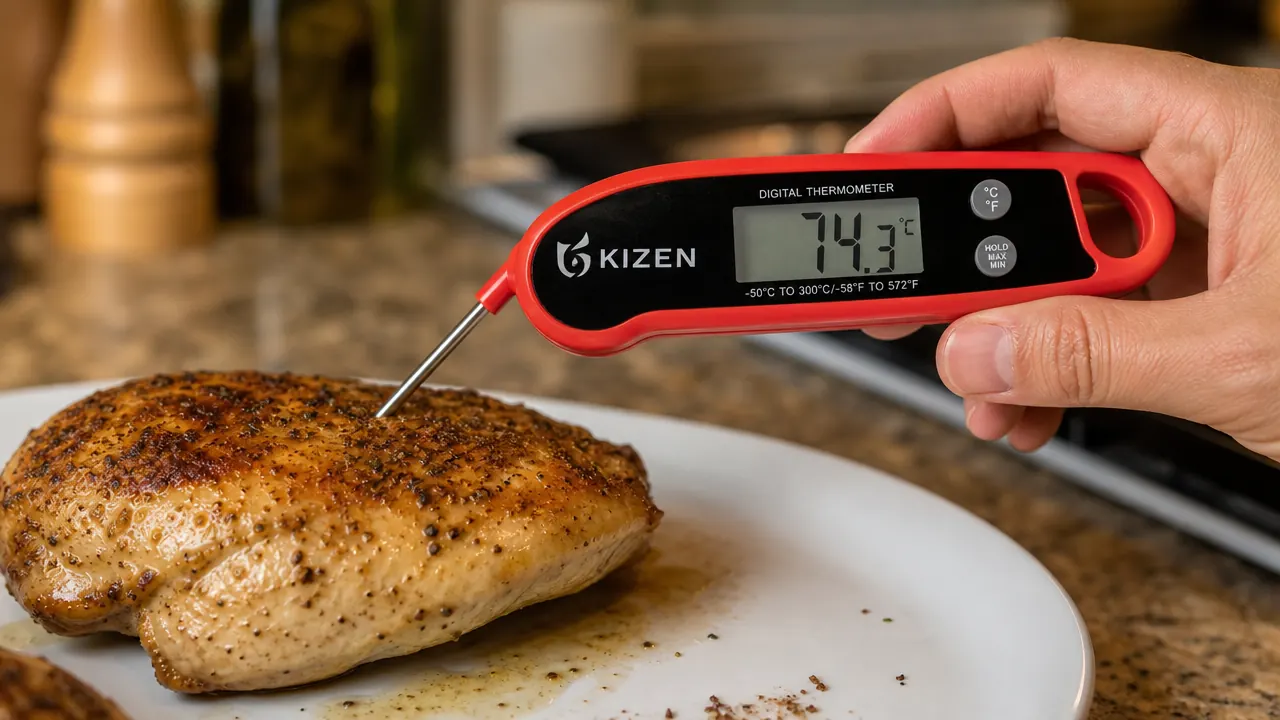
I ended up at the KIZEN Instant Read Thermometer, which was sitting at about $16 at the time. I almost scrolled past it because it seemed too cheap to be accurate. With over 77,000 reviews and a 4.6 average, I figured even if it was mediocre, $16 was a reasonable price to stop lying awake after dinner.
I had been cooking chicken by feel and color and some vague internal clock for twelve years. It turns out my internal clock was frequently wrong by about eight degrees.
If you have ever cut into chicken and just hoped for the best, this is the $16 fix.
The KIZEN reads internal temp in under three seconds, folds flat into a drawer, and has over 77,000 Amazon reviews. It is currently in stock and ships fast.
Amazon Check Today's Price on Amazon →It arrived two days later in a small box that fit in my palm. The probe folds out like a pocket knife. The display is big enough to read without my glasses if I am standing over a hot pan and squinting. I tested it that same night on a batch of pork chops. I pulled them at what felt done, which usually means I go by color and firmness. The KIZEN read 149 degrees. The USDA safe temp for pork is 145, so I was actually fine, but for years I had been pulling pork at that same visual cue and genuinely had no idea where I was landing. Eight degrees either way matters.
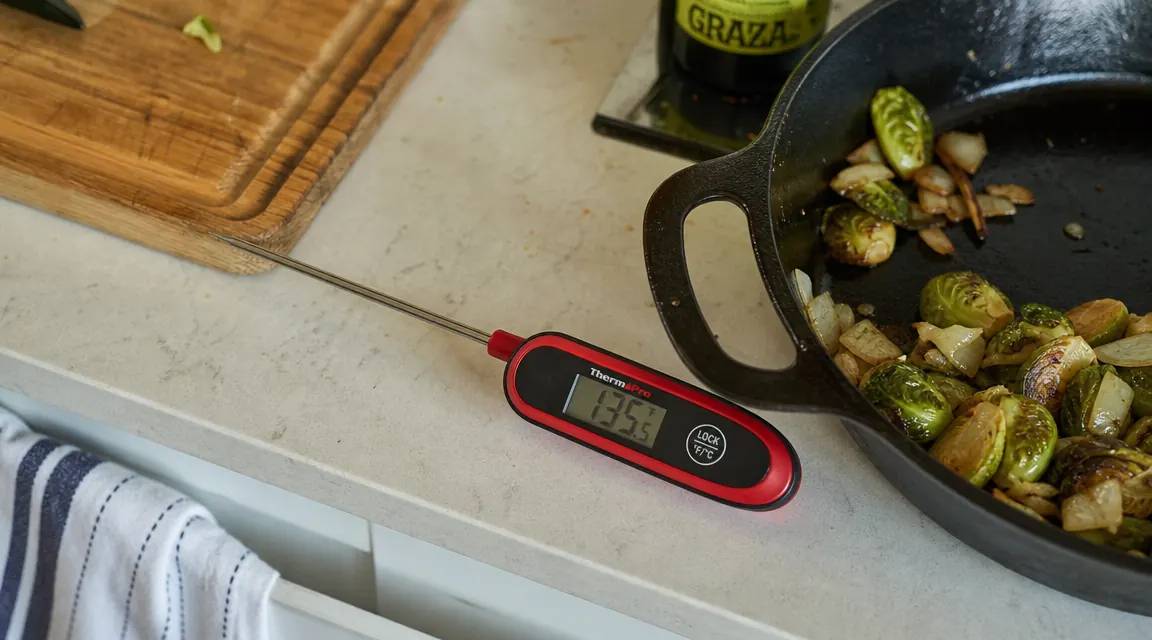
The next week I did chicken again. I had the thighs in the oven at 400 for what I thought was plenty of time. I pulled the tray, let it rest a minute, then poked the KIZEN into the thickest part of the largest piece. 157 degrees. Not there yet. Three more minutes, back in the oven. Pulled again. 166. Done. That was the first time in years I served chicken to my kids with actual certainty instead of a quiet prayer.
I have used it probably forty times since March. Chicken thighs, chicken breasts, pork tenderloin, burgers on the grill, a whole roasted chicken for Easter. It takes about two seconds to read. The probe folds back and I stick it in the drawer next to the spatulas. My husband has started using it too, which is significant because he previously insisted he could tell when a burger was done by pressing on it with his thumb. He was not always right either.
The waterproofing came in handy once when I knocked it into the sink while the faucet was running. Dried it off on a dish towel, tested it on dinner that same night. No issues. Battery is still original. For a $16 tool that lives in a drawer and comes out multiple times a week, it has held up the way I wish more kitchen things did.
What I Would Tell You If We Were Sitting at My Kitchen Table

I am not here to tell you that a meat thermometer changes your cooking in some dramatic way. It does not make your chicken taste better. It does not save you time at the stove. What it does is close the gap between what you think is happening inside that piece of meat and what is actually happening. And that gap, it turns out, was bigger than I realized for a long time.
If you already own one and you use it, good. Keep going. If you are like I was, buying chicken twice a week and guessing every time, and the only thing stopping you from getting a thermometer is that they seem like an unnecessary extra gadget: I promise you this one earns its drawer space. It takes up less room than a pen. It costs less than a takeout order for two. And it means you never have to sit at the table doing quiet math on whether dinner is safe. That peace of mind is worth more than sixteen dollars to me. It might be to you too.
If you want the full breakdown before you buy, I wrote up a longer look at exactly how it performs on chicken, pork, steak, and a campfire sausage situation in my full KIZEN thermometer review. I also ran it head-to-head against a pricier model in the KIZEN vs Lavatools Javelin comparison if you are deciding between the two.
Stop guessing. The KIZEN is $16 and it is the most useful thing in my utensil drawer.
IP67 waterproof, two-second read, folds flat. Over 77,000 reviews on Amazon. Grab it while it is in stock.
Amazon Check Today's Price on Amazon →