
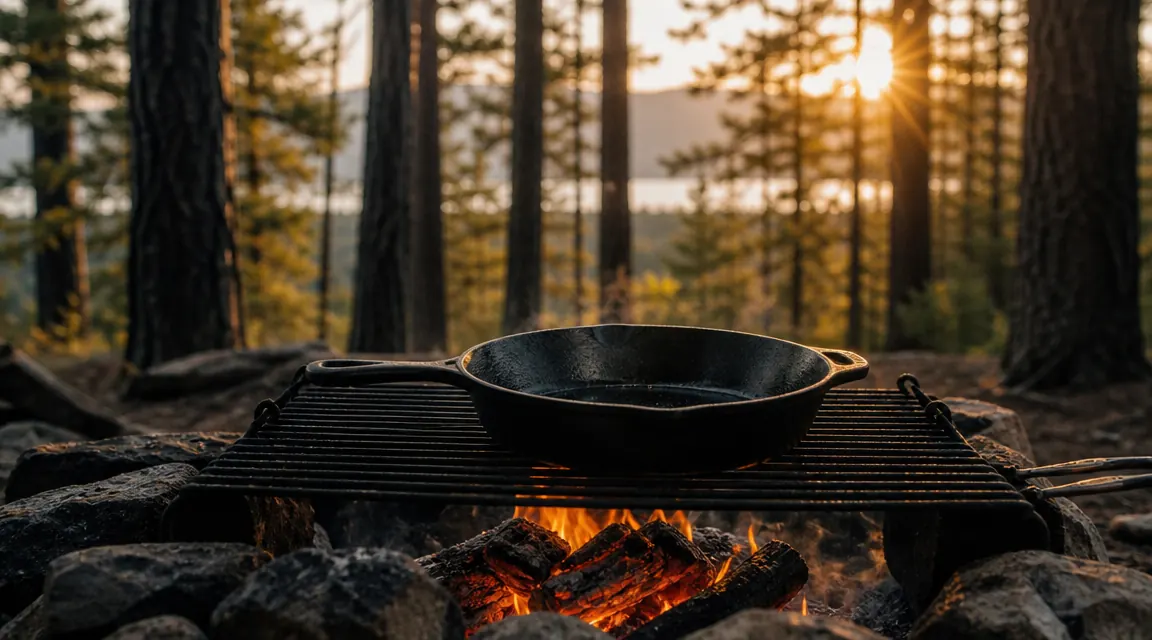
I almost left the Lodge skillet at home. It was 6 a.m., the truck was half-packed, and my husband Marcus was already asking where I put the camp chairs. I had planned the whole trip around foil packets. Chicken thighs, potatoes, some onion powder, wrap it tight, toss it in the coals. I had done it a dozen times. It works fine. Fine. That was the word I kept using every time I described camping food to anyone who asked.
My daughter Haley, who was 9 at the time, had been watching me pack and said, quietly, the way kids do when they are not quite complaining but definitely complaining: 'Are we going to have the soggy packets again?' My son Owen, 12, did not say anything, but he did not have to. I saw him make the face.
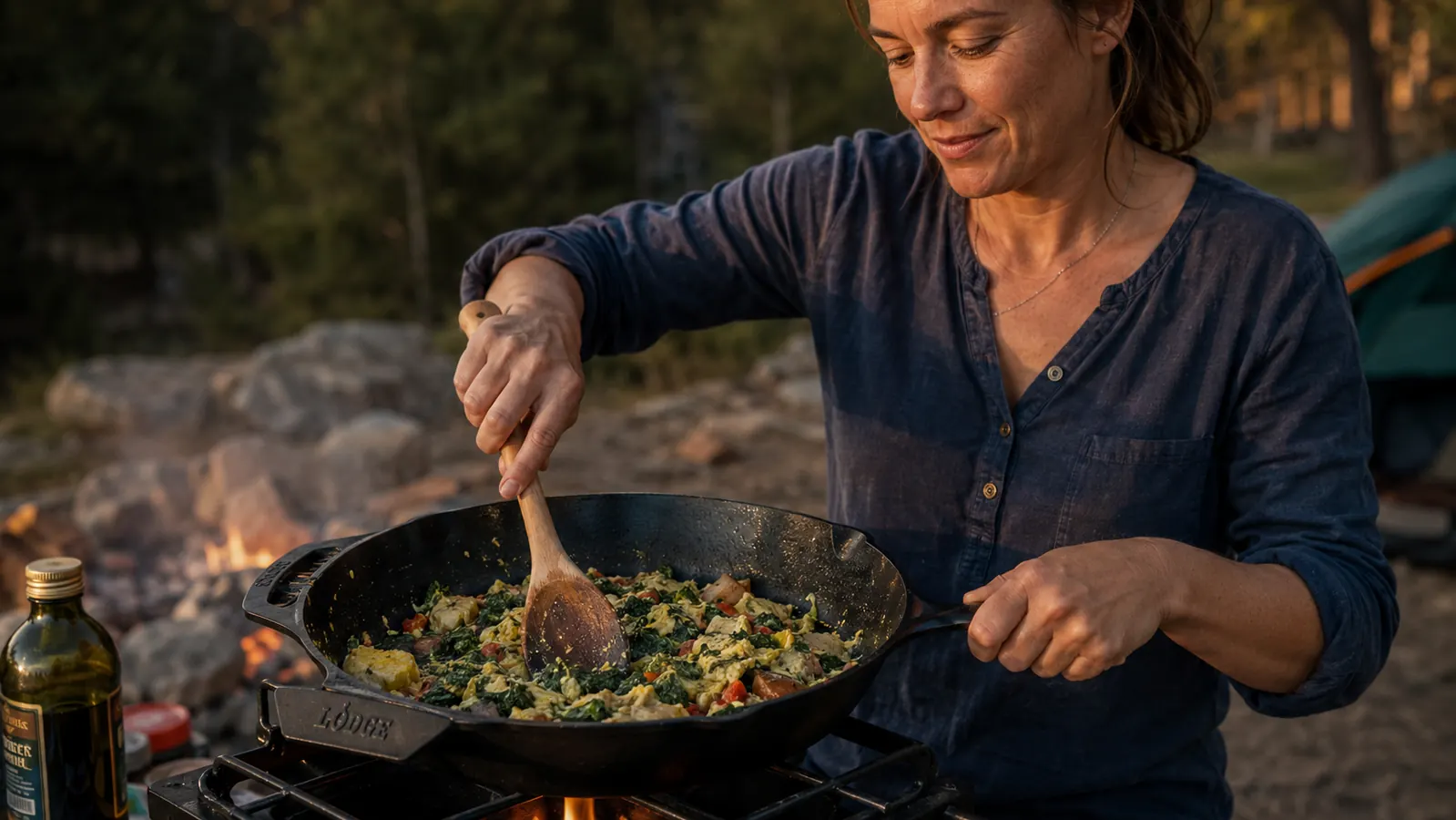
I walked back into the kitchen. Grabbed the Lodge 12-inch cast iron skillet off the stovetop hook. It weighs about 8 pounds and I was already second-guessing the decision before I even got to the truck. But I threw it in a canvas bag, wedged it between the cooler and the tent stakes, and we left.
Haley asked me to put the skillet in the picture she took of the campfire. She said it looked 'like a real cooking show.' I took that as a win.
We were camping at Lake Kissimmee State Park, three nights, nothing fancy. The first morning I set the Lodge directly on the grate over the fire, let it heat up for about four minutes, and cooked bacon in it. Actual bacon. It rendered out perfectly, the strips stayed flat instead of curling up into weird little tubes the way they do in a thin pan, and the drippings were right there waiting. I scrambled eggs directly in the same pan. Four eggs, a little butter, done in two minutes. We ate at the picnic table while the sun was still low through the trees and I thought: why did I ever do it any other way.
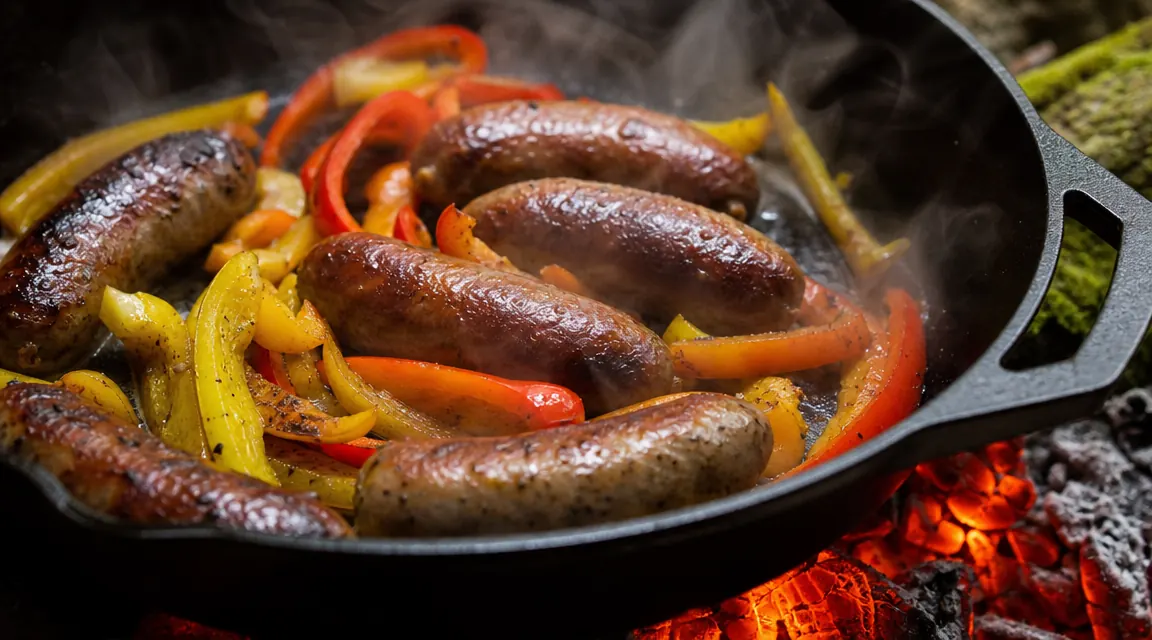
Dinner that night was sausage links and sliced bell peppers, cooked over the same fire we had used to roast marshmallows thirty minutes earlier. The pan held the heat so evenly that nothing burned on the edges while the center stayed raw, which is the eternal problem with camping cooking on an uneven grate. The Lodge just sat there, steady, doing its job. Owen ate two full servings and asked if there was more. There was not, but that question alone made the 8 pounds of iron worth every inch of cargo space.
The same Lodge skillet that went on that trip is rated 4.7 stars by over 164,000 people on Amazon.
It costs about the same as a tank of gas, it works on your campfire, your stovetop, your oven, and your grill, and it genuinely lasts decades if you treat it right. I have been using mine almost every day for two years.
Amazon Check Today's Price on Amazon →The second morning I made pancakes. I want to be clear: I do not make pancakes at home because I find the whole process annoying on a nonstick pan. But on the Lodge, with a light wipe of butter, they released cleanly every single time. Haley stood next to the fire and watched them cook and asked me why the bubbles in the batter meant they were ready to flip. I explained it to her. She flipped two of them herself, and only one was a little ragged on the edge, and she ate that one on purpose, as the cook's privilege.
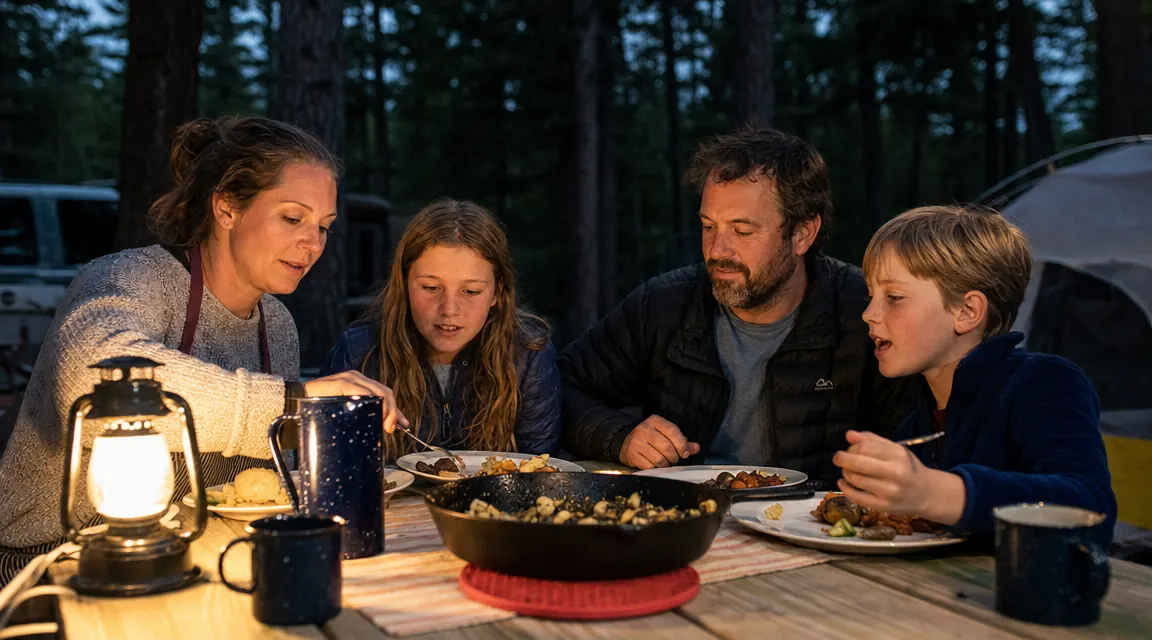
By night two I had stopped thinking of the skillet as extra gear. It had become the organizing logic of the whole meal plan. What can I cook in the Lodge? That was the question. The answer turned out to be most things. Dinner night two was a hash: diced sweet potato from the cooler, half an onion, leftover sausage sliced thin, some garlic powder from a small spice kit I always pack. Cooked it in two batches, let it sit undisturbed long enough to get a crust on the bottom, then stirred. Marcus said it was the best thing I had ever made camping. He was not exaggerating by much.
What I Would Tell You If We Were Sitting at My Kitchen Table
I know the common worry about cast iron. People think it is high maintenance, or that it will rust if you look at it wrong, or that you cannot clean it properly at a campsite without a full sink setup. Here is the honest version from someone who is not a chef and did not grow up with cast iron: it is way simpler than the internet makes it sound. After every meal on that camping trip I wiped the Lodge out with a paper towel while it was still warm. That is it. Two of the three days I used a little water and a stiff brush. I dried it over the remaining heat for ninety seconds. No rust. No drama. I also want to say clearly: this pan is not magic. The first time you use cast iron over a campfire you will probably get the heat a little wrong in one direction or the other. That is normal. The pan recovers. You adjust. By the third meal you will understand how it behaves and everything after that gets easier.
If you are someone who has been doing foil packets or hot dogs on sticks and wondering if there is a better way that does not require a camp stove and a full kitchen setup: this is that better way. The Lodge 12-inch is the specific one I own and the one I would buy again without hesitation. I have also written a longer breakdown of how it compares to a carbon steel pan if you want to read more before deciding. And if you want the full two-year review from daily weeknight cooking, not just camping, I have that too. Both are linked below. But if you are already on the fence and just needed someone to tell you it is worth it: it is worth it. Haley asked me to put the skillet in the picture she took of the campfire. She said it looked like a real cooking show. I took that as a win.
Over 164,000 Amazon reviews, 4.7 stars, and it fits in the same bag as your tent stakes.
The Lodge 12-inch cast iron skillet is the one pan that works the same way over a campfire as it does on your stovetop. Check today's price before your next trip.
Amazon Check Today's Price on Amazon →