

I want to be upfront about something before I tell you whether the Cosori Electric Kettle 1.7L is worth buying: I almost returned mine in the first two weeks. Not because it does not work, because it does, but because I did not understand it yet. If I had sent it back during that confused window, I would have missed the thing I now use every single morning. So consider this the review I wish someone had written before I bought it, including the parts that frustrated me, the parts that caught me off guard, and the one fix that changed everything about how I use the presets.
I'm Darlene. I work in accounting, my two kids are nine and twelve, and my mornings run on a tight schedule. I have been using the Cosori kettle almost every day for just over a year, mostly for my pour-over coffee and my younger daughter's nightly chamomile tea. I picked it up instead of a basic boil-only kettle because I wanted temperature control without spending three times as much on a gooseneck. After a full year of morning rituals, school-day rushes, and at least one hard lesson about hard water, here is what I actually think.
The Quick Verdict
A genuinely capable kettle that earns its place on the counter, but it asks for patience up front and punishes you if you have hard water and skip the descaling step.
Amazon Check Today's Price →If you want temperature control without a barista price tag, this is the most practical way to get it.
The Cosori 1.7L has six preset temps, a 60-minute keep-warm mode, and a stainless interior. See today's price before you decide.
Amazon Check Today's Price on Amazon →How I Have Actually Used It
My morning routine starts at 6:10. Kids need to be at the bus by 7:25, so I have about 40 minutes to get coffee made, lunches packed, and everyone moving. The kettle fits into that window because I can start it while I'm getting the coffee gear out, and by the time I reach for the pour-over dripper, the water is already at the 200-degree preset I have programmed for light roast. That part works exactly as advertised.
In the evenings, my daughter Mia uses it for herbal tea. She's twelve and comfortable handling it, which matters because the exterior stays cool to the touch during heating. She hits the 175-degree preset, it beeps when ready, and she pours without any drama. The keep-warm feature holds the temperature for 60 minutes, which is genuinely useful when she sets the kettle and then forgets about it because her brother said something annoying.
What I did not fully appreciate until month three is how much the 1.7-liter capacity matters. I was refilling my old basic kettle two or three times on heavy tea mornings. The Cosori handles a full pour-over plus two mugs of Mia's chamomile in a single fill. That sounds minor until you have been doing it daily for a year and realize you have not thought about refilling in months.
The Six Presets: Useful Once You Actually Learn Them
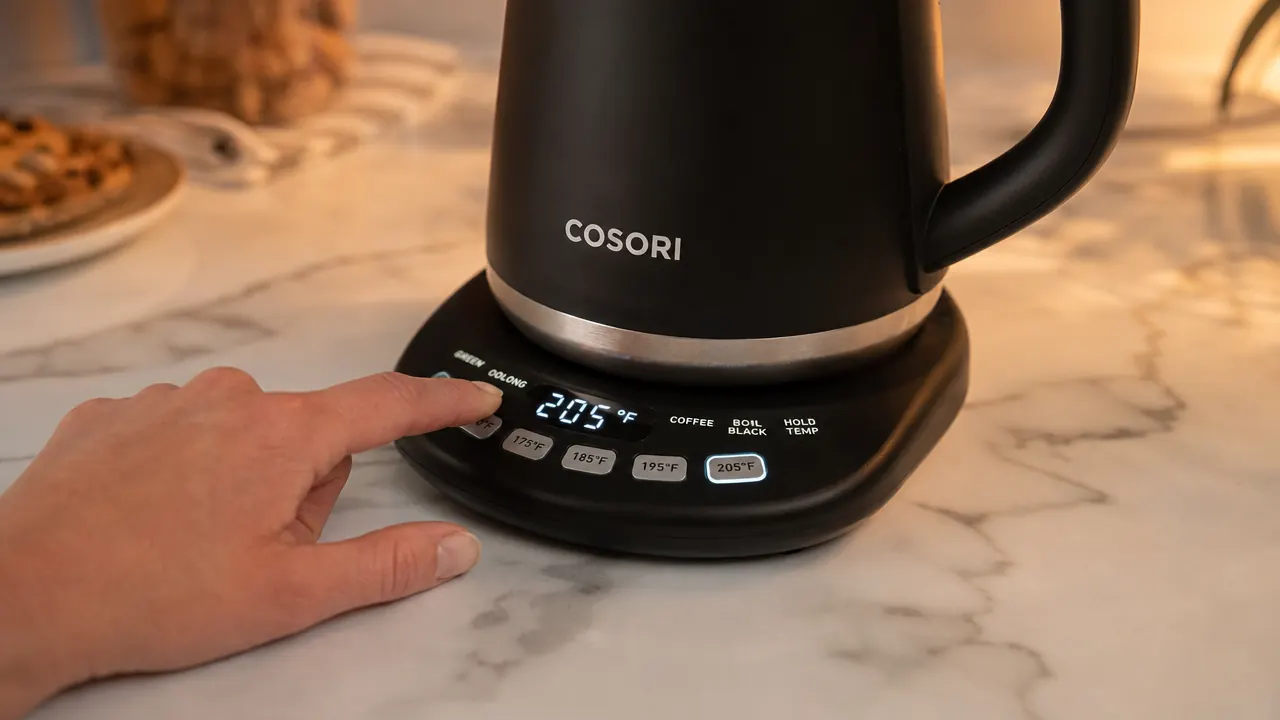
Here is what the box does not tell you: the six presets are labeled by drink category, not by temperature. There is a coffee button, a green tea button, a white tea button, and so on. If you are the kind of person who knows exactly what temperature you want for a specific brew method, this system is going to drive you up the wall for the first couple of weeks. You will stand there pressing the green tea button and wondering if 167 degrees is the right call for the particular green tea you bought at the grocery store.
The actual temperatures behind those presets are 104, 140, 167, 175, 185, and 212 degrees Fahrenheit. Once I looked those up and wrote them on a sticky note on the cabinet above the kettle, the whole system clicked. The coffee preset is 200 degrees, which is close enough to ideal for most pour-over applications. The issue is that Cosori does not put those numbers front and center on the display. You see a category icon and a temperature only after it starts heating. My honest fix: just learn the numbers and stop thinking about the drink labels.
The presets stopped being confusing the day I wrote the actual temperatures on a sticky note. That one small step made the whole kettle make sense.
There is also no way to set a custom temperature that is not one of the six presets. If you want 195 degrees for a specific pour-over ratio you read about somewhere, you are stuck choosing between 185 and 200 and deciding which one is close enough. For most home cooks, this is fine. For the precise brewing crowd, it is a real limitation. I am in the first camp, so it has not bothered me much after the learning curve settled down.
The Lid Hinge: A Real Concern, Not a Dealbreaker
I am going to talk about the lid, because nobody talked about it before I bought this kettle and I wish they had. The Cosori lid opens with a button on the top of the handle. You press it, the lid flips up, you fill it, done. The mechanism works well. What feels slightly off is the hinge itself. After about eight months of daily use, there is a faint give in the lid when it is in the open position. It does not wobble during pouring. The lid stays closed properly when you need it to. But if you grab the lid to push it fully open and apply any sideways pressure, it feels noticeably more flexible than it did when the kettle was new.
I have not had it fail. The lid has not cracked, the hinge has not separated, and nothing has leaked. But the feeling of slight give is there, and I notice it every time I fill at the sink. If you are the kind of person who is rough with kitchen tools, or if you have a nine-year-old who tends to bang things around, I would keep an eye on it. Cosori's customer service record appears solid based on the reviews I've read, and they seem responsive to replacement requests, but I cannot speak to that from personal experience.
Hard Water Is the Elephant in the Room
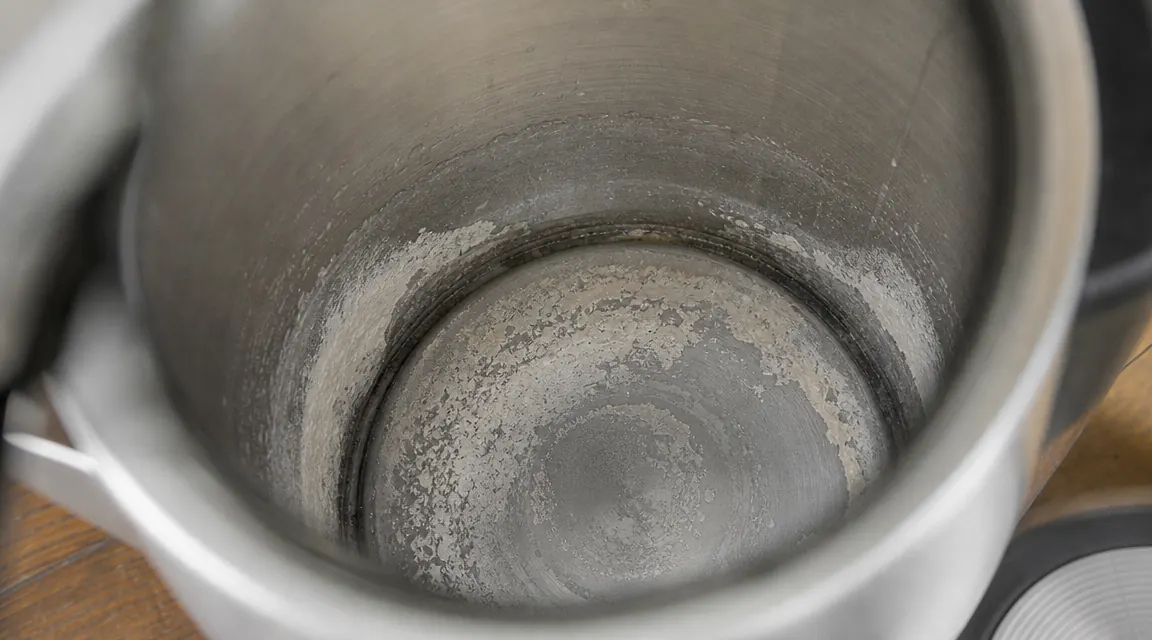
We are in Central Florida. The water here is hard. If you do not know what that means for a kettle, it means calcium and magnesium minerals in your tap water deposit on the heating element and interior surfaces over time. The technical term is scale. The practical term is a white crusty layer that builds up inside your kettle if you do not stay on top of it.
By month four, I had visible scale on the interior bottom of the Cosori that I could see when I held the kettle up to the light. It was not affecting performance yet, but it looked bad and I knew it would eventually. A white vinegar descale fixed it completely. You fill the kettle halfway with equal parts white vinegar and water, run a heating cycle, let it sit for about 30 minutes, then rinse several times. The scale came off and the interior looked close to new.
The part I want to flag: Cosori does not prominently remind you to do this in their documentation. The instruction booklet mentions descaling in passing. If you have soft water or you use filtered water, this might never be an issue for you. If you have hard water and you are filling straight from the tap, plan to descale every six to eight weeks. Put it on a recurring reminder in your phone right now. The kettle's stainless interior does hold up well to vinegar descaling, which is a real plus over plastic-lined kettles that discolor or retain odors.
The Cord Storage Problem
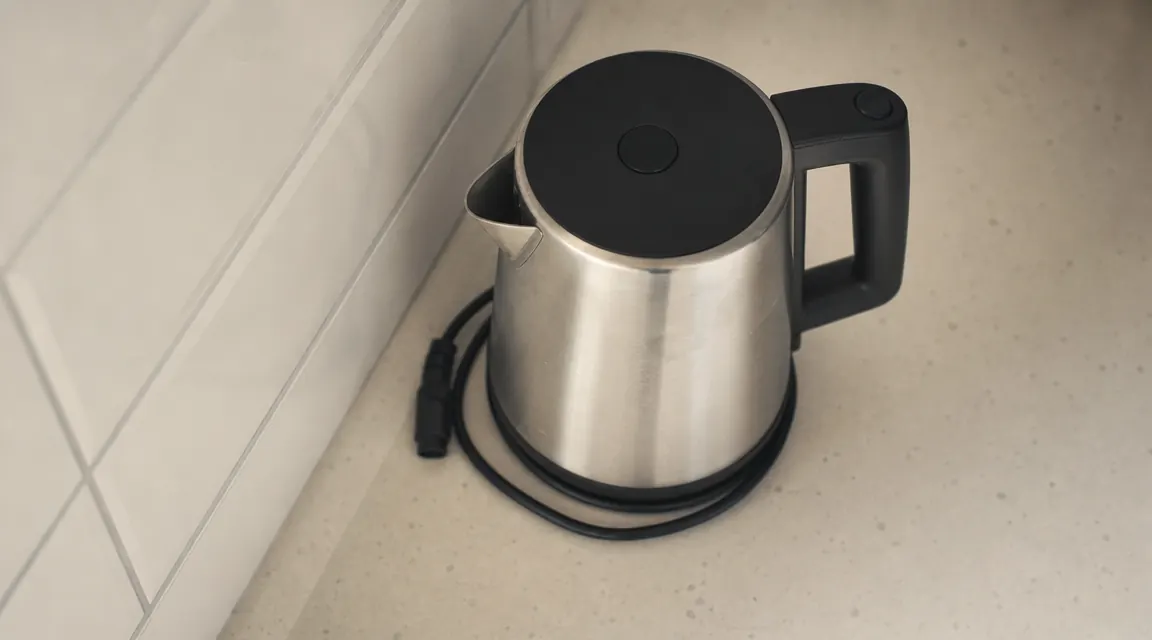
My kitchen counter has limited outlets. The Cosori base plate plugs into the wall, and the cord is roughly 27 inches long. That sounds adequate until you realize the base plate stores no excess cord. Whatever slack you have just sits on the counter or drapes over the edge. Compared to some kettles I looked at that have cord storage built into the base, this is a genuine inconvenience if counter neatness matters to you.
My workaround is a small cable clip attached to the back corner of the counter. The cord routes along the backsplash and stays out of the way. It took five minutes to solve and cost nothing. But it is a valid complaint, especially if your nearest outlet is farther than expected from your preferred kettle spot. Measure before you commit.
What I Liked
- Six temperature presets cover the full range from delicate white tea to a full boil
- 60-minute keep-warm holds temperature accurately, tested with an instant-read thermometer
- 1.7-liter capacity handles a full pour-over plus two mugs without refilling
- Exterior stays cool during heating, safe for a responsible older kid to use independently
- Stainless steel interior descales cleanly with white vinegar, no odor retention
- Boils 1.7 liters in under six minutes, which genuinely fits a rushed morning window
Where It Falls Short
- Preset labels show drink categories first, not temperatures, which causes confusion early on
- No custom temperature option between presets, so 195 degrees is not possible
- Lid hinge develops slight flexibility after several months of heavy daily use
- Hard water users will need to descale every six to eight weeks or performance suffers
- Cord does not store in the base, which creates counter clutter near shorter outlets
- Rating 4.5 out of 5 with 47,921 reviews suggests most buyers are happy, but the gap between the 5-star average and real-world daily use is real for buyers with hard water
What the Keep-Warm Feature Is Actually Like
The 60-minute keep-warm is more useful than I expected and less magical than the marketing implies. After the kettle reaches your target temperature, pressing the keep-warm button holds that temperature for up to 60 minutes. I tested this with my instant-read thermometer at the 30-minute mark twice. Both times it was within three degrees of the target. That is accurate enough for any brewing application I care about.
What it is not: a slow cooker replacement, a way to keep water at a rolling boil, or a device that monitors temperature constantly without some energy draw. The kettle cycles on briefly to maintain the target. You will hear it click occasionally during the keep-warm window. That is normal and not a sign of a problem. The keep-warm function shuts off automatically after 60 minutes, which is good, but it also means if you are 62 minutes away from needing it, you are reheating.
How It Compares to What I Had Before
Before the Cosori I was boiling water in a saucepan, which is exactly as annoying as it sounds when you are trying to hit a specific temperature for coffee. I would boil it, wait for it to cool a bit, guess at the temperature, and proceed. My coffee was inconsistent because my water temperature was inconsistent. The Cosori solved that problem completely and immediately. On that narrow comparison, it is not even close.
The more relevant comparison for most buyers is probably between this and a basic boil-only electric kettle that costs twenty dollars less. The honest answer is that the temperature presets are worth the price difference if you brew anything other than basic black tea. Pour-over coffee, green tea, white tea, French press all benefit from water that is not at a full boil. If you only ever make instant coffee or you just need hot water for oatmeal, the cheaper kettle is probably fine. But if you want even one of those six preset temperatures, you are getting a meaningful functional upgrade.

Who This Is For
This kettle fits you well if you brew coffee or tea daily and you care about water temperature but do not want to spend over a hundred dollars on a gooseneck kettle designed for specialty coffee. It also fits a household like mine where multiple people use it for different drinks at different temperatures throughout the day, because the presets let each person just hit their button without thinking about it once they learn which button is theirs. Parents of kids old enough to be trusted around hot water will appreciate the cool-touch exterior.
Who Should Skip It
If you live somewhere with very hard water and you know you will not keep up with a descaling schedule, this kettle will give you problems before the year is out. If you need a custom temperature that falls between presets, the Cosori is not built for that level of precision. If you have limited counter space and very short access to your nearest outlet, the cord situation will irritate you. And if you want a pour spout designed for slow, controlled blooms on specialty pour-over coffee, you will find the wide spout here moves water too fast for that application. For that specific use case, the Bonavita gooseneck, which I compared it to directly in another piece, is the better choice.
A year in, I still reach for it first thing every morning. That is the clearest verdict I can give.
The Cosori 1.7L kettle handles six temperature presets and 60 minutes of keep-warm in a package that fits a real family kitchen. Check today's price on Amazon and read the current reviews.
Amazon Check Today's Price on Amazon →